
What are Spatial Targets?

Spatial conservation targets are science-based goals that help determine how much of Earth’s land and ocean should be protected to safeguard biodiversity. They work by identifying and prioritizing areas essential for maintaining biodiversity, using spatial planning that accounts for ecosystem health, wildlife connectivity, species diversity, and climate resilience to ensure conservation efforts are both effective and lasting.
Research, beginning as early as the 1970’s, suggests that we need to keep at least Half of Earth’s land and ocean ecosystems intact to maintain the ecological services derived from these areas, a conclusion supported by upwards of 70% of climate scientists. Though not all ecosystems require the same amount of protection, making spatial planning particularly important when setting conservation targets. For example, some rainforests, like the Amazon, must remain at least 80% intact to avoid collapse, while others, like grasslands, require less, or around 40%. The science points to a simple conclusion: on average, maintaining at least half of Earth’s land and seas is necessary to sustain life-support systems for nature and people.
Why do spatial targets matter?
Spatial targets matter for conservation because they turn broad goals into clear, measurable action, showing where and how much nature needs to be protected to keep ecosystems functioning. Spatial targets help guide global action by:
- Giving governments and communities a shared benchmark
- Guiding investment toward priority conservation areas so that limited resources make a greater impact
- Making progress trackable and transparent
- Encouraging long-term planning rather than short-term fixes
- Expanding protected areas (PAs) and Other Effective area-based Conservation Measures (OECMs) to safeguard the most biodiverse sites
How are spatial targets a part of WILD's work?
Many argue that protecting half of the planet is not politically feasible. But from a planetary perspective, we are already at the threshold and Earth is losing nature at a pace that leaves no room for delay. While some propose gradually increasing protection, from 17% to 30% and eventually to Half, WILD takes a different stance. We believe the science is clear, and our work is grounded in what the planet needs now, which is conserving and stewarding at least half of Earth’s land and seas today.
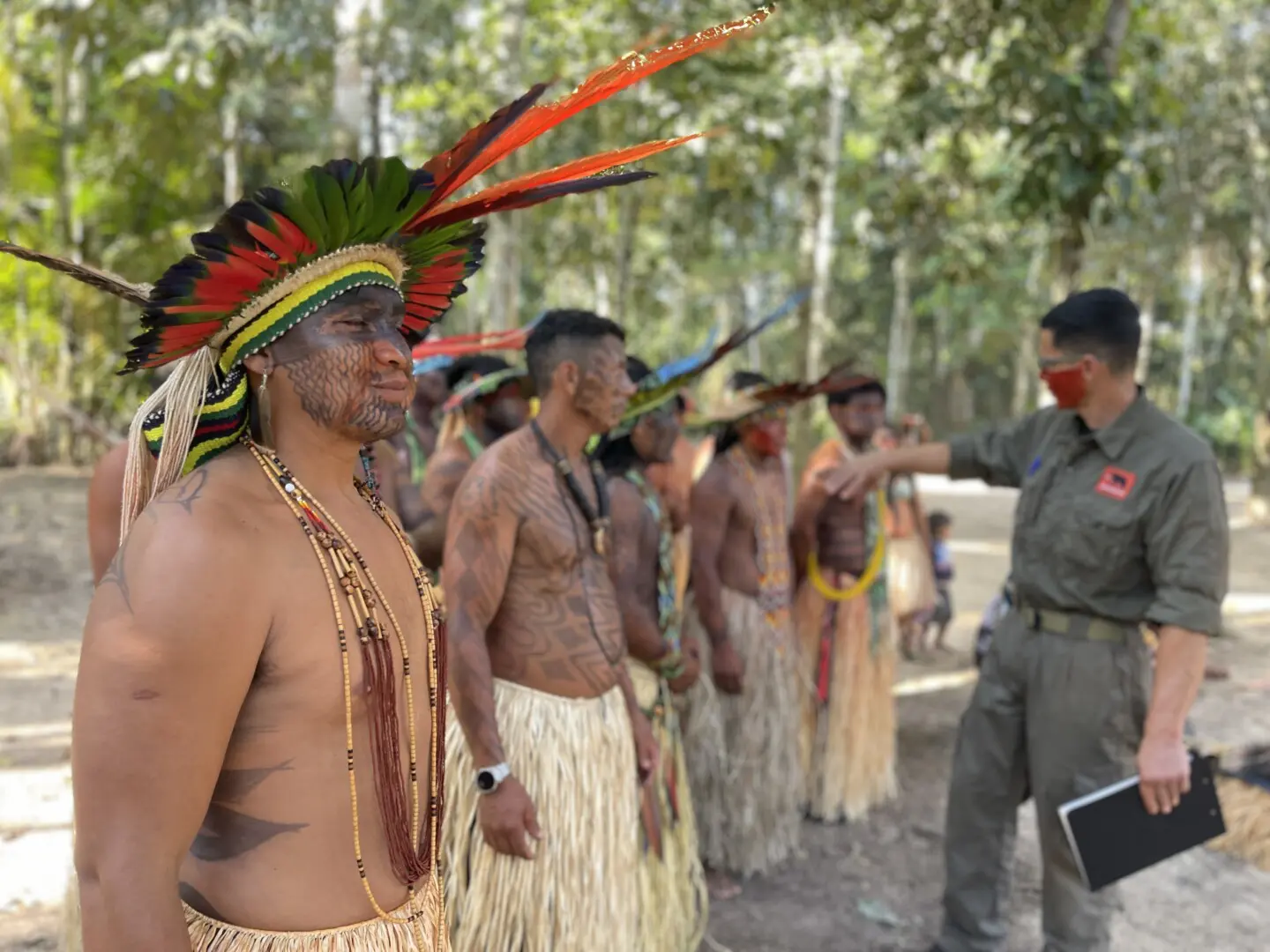
Effective spatial targets recognize that conservation is not just about nature, it’s about people too. Lasting conservation, supports Indigenous stewardship, community land rights, and sustainable livelihoods by integrating social, cultural, and ecological knowledge into decision making. For this reason, WILD.org prioritizes partnerships with Indigenous communities for our on-the-ground conservation projects, and invests in the development and resourcing of new conservation tools that make large-scale, rights-based protection possible.
In addition to our on the ground programs, WILD is strongly advocating to mainstream Half as the spatial target at the international level. In 2025, this manifested as Motion 096, Setting Area-Based Targets on Scientific Evidence and Reversing Historic Injustices, one of the most ambitious conservation motions brought to the IUCN World Conservation Congress. WILD and our partners championed Half on the global stage, bringing together governments, scientists, Indigenous leaders, and NGOs around the evidence for large-scale, rights-based conservation.
While Half was not adopted as a formal target, Motion 096 was adopted with an important action directing IUCN—working closely with Indigenous Peoples’ members—to review the scientific basis and mechanisms for increasing area-based targets, explicitly recognizing that some scientists and studies call for 50% or more. This does not close the door on Half; it opens a formal process to determine how far our targets must rise beyond 2030.
Using this momentum, we will be working closer than ever with partners, scientists, and organizations around the globe to ensure that protecting Half the planet is widely recognized as a scientific necessity.