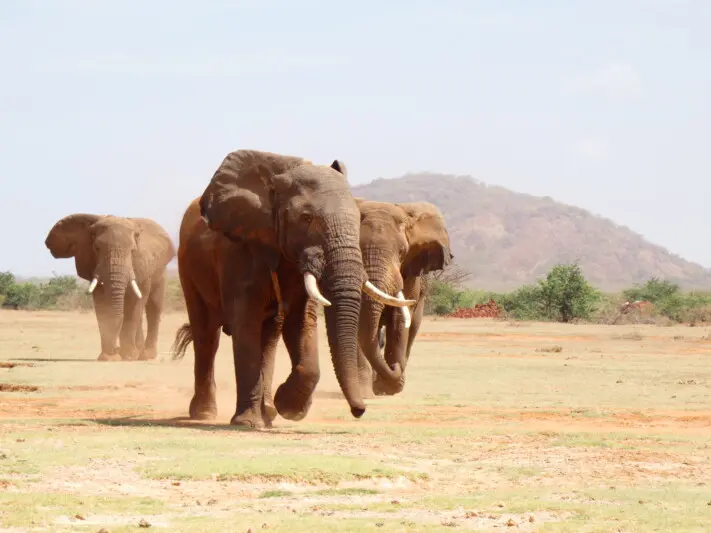
The bull elephant who made Lake Jipe his home, and the community that gave him room
by Zak Mutinda, Eco-Jipe Program
I have known Manolo for eight years now. I first heard about him in 2018, as an intern at the Elephants and Bees Research Centre in Sagalla, Voi, shortly after the launch of Kenya’s Standard Gauge Railway. This is his story, from where I stand.
Before the SGR, elephants moved between Tsavo East and Tsavo West with relative ease. The only significant barrier was the Nairobi–Mombasa Highway, Route A104. Between 2014 and 2018, the SGR line cut a hard ecological divide across the two parks, leaving only a handful of bridges for wildlife to cross between them. To track what this was doing to elephant movement, around twelve elephants were fitted with collars across the wider Tsavo Conservation Area. Manolo was one of them.
In 2019, his original collar was replaced with a newer telemetry GPS unit, better precision, longer life. Over the following years, Save the Elephants monitored Manolo and the others across the region. One place stood out: the Lake Jipe ecosystem, where three collared elephants spent time seasonally. For Manolo, it was never seasonal. Jipe was his residence, year-round, with only occasional visits into the park.
His sustained presence in Kachero, Mkwajuni, Mkocheni, and Orkung’u prompted a closer look at how the surrounding community actually experienced living alongside elephants. Dr. Maureen Kinyanjui, Dr. Lydia Tiller, and Dr. Lucy King led a Rural Rapid Appraisal to find out. The result was stark: a measurable shift in local attitudes toward elephants, from tolerance toward conflict, driven by direct threat, fear, and the perceived absence of alternative livelihoods (Kinyanjui et al., 2020).
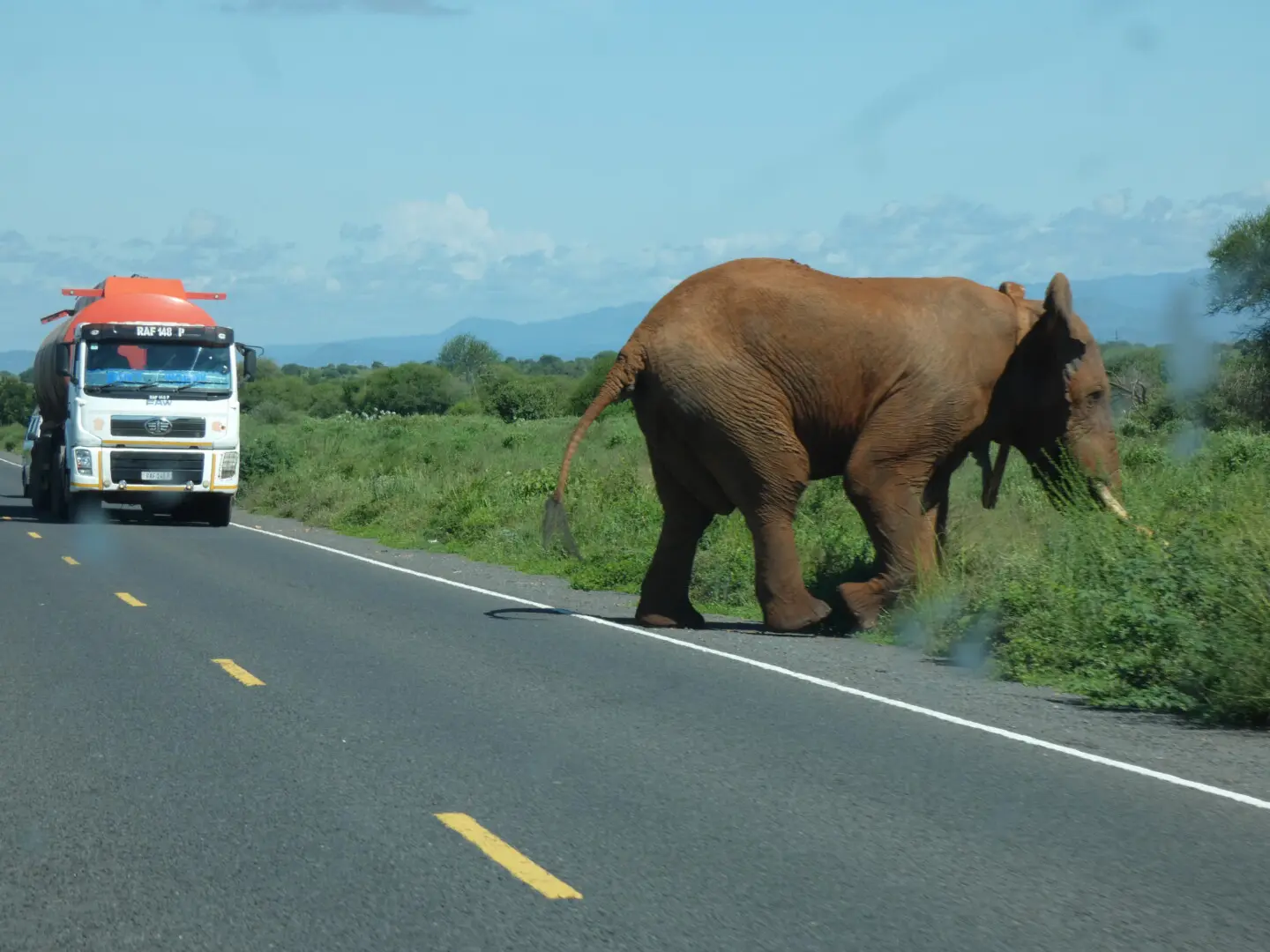
In 2021 I went to Jipe myself, as a scholar this time, to dig into that coexistence–conflict continuum, what was actually pulling Manolo and the other elephants into the villages. The answer turned out to be a plant: Typha domingensis, bulrush cattail, growing in the wetland. Its roots carry exceptionally high nitrogen relative to the shoots, and the macrophyte biomass regrows fast and stays abundant year-round. It gave the elephants a forage source that never ran dry, and it is, as far as I can tell, the reason Manolo stayed in Jipe at all.
By 2022 I had started cataloguing, individually, the bulls associating with Manolo around the villages. By the end of 2023 that catalogue held 27 individuals, elephants who fed from the wetland on a schedule that had stopped tracking the dry-season/wet-season rhythm most elephants live by. They fed from the marsh eight to eighteen hours a day, streamed to the shore between 8am and noon, and retreated each night into the cover of Prosopis juliflora and the edge of human settlement.
Through all of it, I documented Manolo’s well-being daily, with Alphonse Maira, my research assistant, and with the Jipe community itself. One thing about him stood out early: he was not afraid of people, and the people around him were not afraid of him. The community traced his calm temperament back to a matriarch they called Mama Africa — probably a relative of his, though we may never know for certain. Mama Africa is no longer in Jipe.
His collar drew attention from everyone who saw him move through the villages. People called it an alarm. Huyu hatusumbui, bora tu, tupishane, he doesn’t bother us; we just give each other room. That relationship between Manolo, the collar, and the community became part of a joint STE/WCS publication on communities living alongside elephants.
In 2024 I recorded Manolo crop-raiding in Mkocheni. Not long after, I caught him taking down the goalposts at the Jipe school football pitch in Kachero — the last photograph and video anyone has of Manolo wearing his collar.
In March 2025, Manolo dropped that collar near Orkung’u. Several community members assumed he had migrated or died. I told a few villagers what had actually happened, and we searched for the collar without luck until Save the Elephants recovered it in June 2025. From then on we knew him the way the community always had by his even ears, his massive uniform tusks, two holes in his left ear, and a pink-white spot behind his right.
In October 2025, our EJP team caught him on camera in the company of eight other bulls, drinking calmly at the lake while our own team took an evening swim nearby. He was peaceful, unbothered, entirely at ease among them. Later that month, KWS, Save the Elephants, and EJP made a joint attempt to re-collar him near that same swim spot. It didn’t come off — Manolo and the others held their ground in the wetland until well after dark, and the team stood down for the night.
Through 2025, the landscape around him kept closing in. Electric fencing, tarmac roads, and expanding farmland cut his range into narrower and narrower pieces. Early in the year, he’d found a resting spot under a baobab near Mata, where I occasionally found him through the first months of 2025 — until that spot became a plantation. Today it carries a hundred acres of maize. He couldn’t stay there any longer, and neither could the elephants around him.
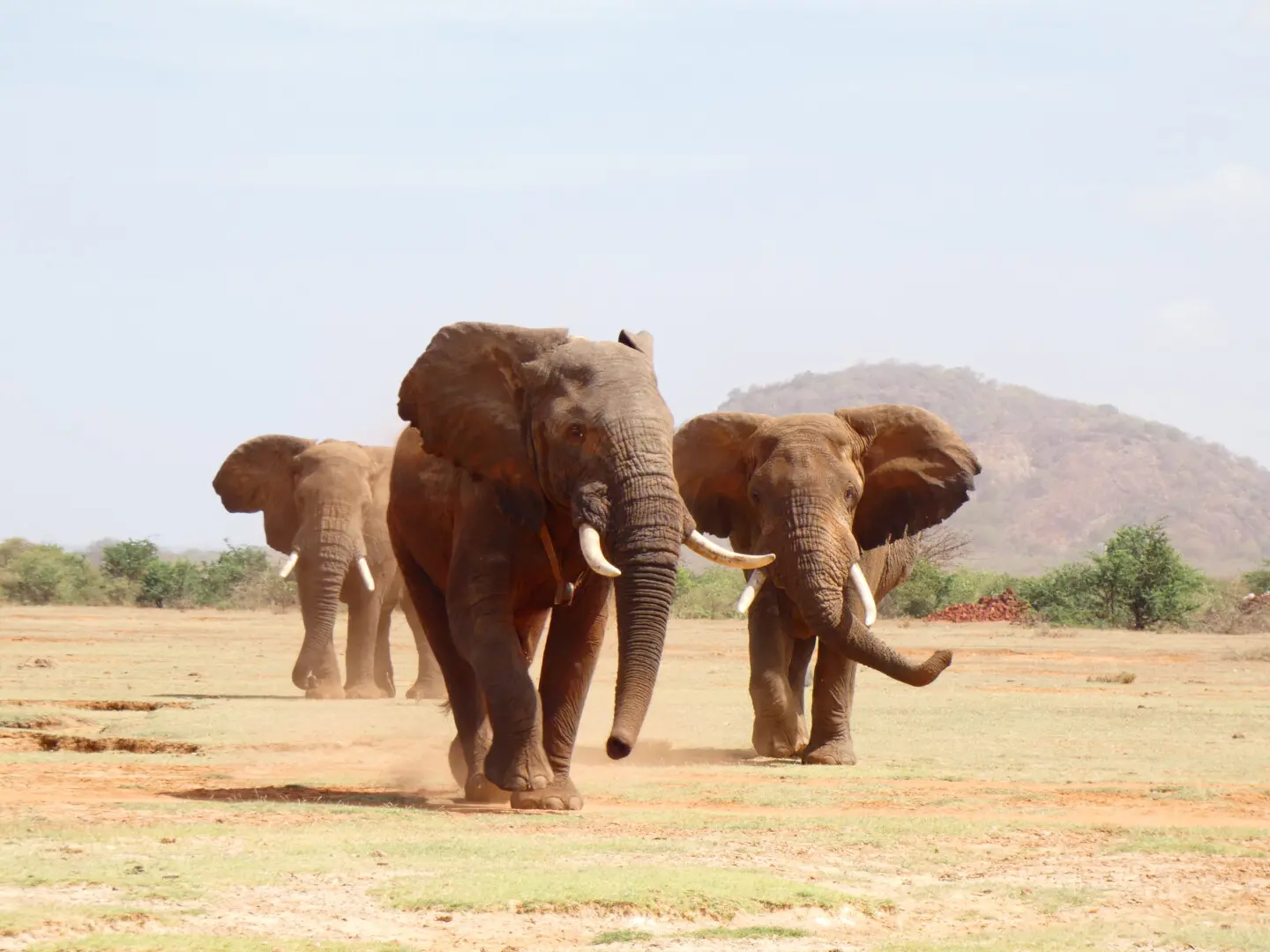
By early 2026, Manolo and the other bulls had found a different kind of draw at that same spot: the maize itself. They broke down the electric fencing and raided it repeatedly.
The last time I saw him alive was seven days before his death — August 17th, sunset, alongside Pumba, Monstera, and twelve other bulls in Mkocheni. As it got dark, Manolo and the group moved north, toward a red shipping container on the edge of the settlement. Where the night actually took them, we don’t know. That is the last confirmed sighting our team has of him.
On 24 August 2026, we identified his carcass at Mkwajuni.
A veterinary post-mortem, conducted with KWS, found the cause of death to be septic peritonitis, arising from two perforations in the caecum. Intestinal contents had leaked into the abdominal cavity, and there was extensive pus around the internal organs — consistent with an advanced, severe infection. That gives us a clear medical cause of death. What led to the perforations themselves is something we may still need to interpret. What the findings do rule out is any sign of external attack or human involvement.
Manolo was one of ours — an elephant we knew individually, tracked for eight years, and could recognize in this landscape at a glance. We will keep his record in our ID catalogue, and we will keep documenting the twenty-six bulls who are still out there in the wetland he helped us understand.
We shall miss Manolo.
Zak, Eco-Jipe Program